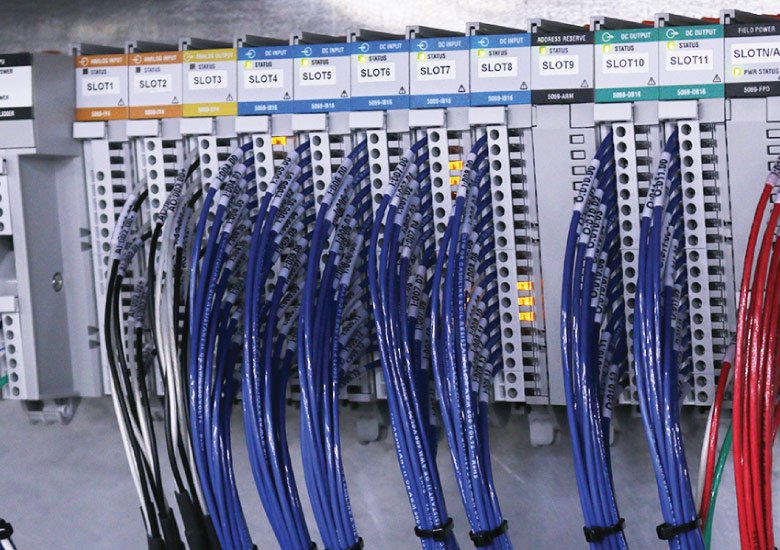
Imagine an orchestra where every instrument plays perfectly in sync, producing a flawless symphony. Now, picture an industrial operation—a printing press, a power plant, a vast assembly line. For these complex systems to run with such precision, their individual components must perform flawlessly, day in and day out. This is where Control & Automation Parts step onto the stage. They are the unsung heroes, the vital gears and circuits that dictate efficiency, safety, and ultimately, your bottom line.
Without robust, reliable control and automation components, machinery grinds to a halt, production lines falter, and profits evaporate. This guide pulls back the curtain on these essential elements, helping you understand their role, choose wisely, and keep your operations humming.
At a Glance: Your Guide to Control & Automation Parts
- Foundation of Industry: Learn why these parts are indispensable for any modern industrial operation, from printing to power generation.
- Key Components Demystified: Understand the core functions of relays, contactors, motor starters, PLCs, switches, and fuses.
- Brand Deep Dive: Get insights into trusted manufacturers like Klockner Moeller, Eaton, and Siemens, and their specialized offerings.
- Choosing Wisely: Discover the critical factors in selecting the right parts for your specific machinery and operational environment.
- The Supplier Advantage: See how a dedicated, knowledgeable distributor can be your strategic partner in minimizing downtime and ensuring availability.
- Peak Performance Strategies: Practical advice on maintaining your control systems and extending the lifespan of your components.
The Unseen Backbone: Why Control & Automation Parts Dictate Your Success
In any industrial setting, every movement, every sequence, every safety interlock relies on precise electrical and mechanical signals. From the moment a machine powers on to the final product leaving the line, it’s a ballet of synchronized actions, all choreographed by control and automation components. Think about the high-speed precision of a Heidelberg printing press or the powerful, continuous operation in a metalworking plant—it's all enabled by these often-overlooked parts.
When a critical component fails, the ripple effect can be devastating. Production stops, deadlines are missed, and repair costs mount. In environments like power plants or pumping stations, a failure isn't just an inconvenience; it can have significant environmental or public safety implications. Choosing the right Control & Automation Parts isn't merely about buying a replacement; it's an investment in uptime, safety, and long-term operational integrity.
Deconstructing Industrial Control: Essential Components You Need to Know
Industrial automation relies on a vast array of specialized parts, each with a distinct job. Understanding these foundational elements is key to diagnosing issues, planning upgrades, and making informed purchasing decisions.
Relays and Contactors: The Workhorses of Electrical Switching
At their core, relays and contactors are electrical switches. But their roles in industrial automation are far more critical than a simple light switch.
- Relays: These typically handle lower current loads and are often used for control circuits. They act as intermediaries, allowing a small electrical signal to control a larger, separate circuit. For instance, a PLC might send a low-voltage signal to a relay, which then switches on a motor starter.
- Contactors: Built for higher current applications, contactors are designed to safely switch large electrical loads, most commonly motors. They are robust and built to withstand the rigorous demands of industrial environments, often switching motors on and off hundreds or thousands of times a day.
When you think about reliability, brands like Siemens are often top of mind. Siemens Sirius motor starter contactors, for example, are engineered for high contact reliability and a narrow design, making them space-efficient. Their long lifetime and ability to operate under extreme conditions mean they're suitable for almost any application, from dusty woodworking shops to humid HVAC systems. What’s more, they’re customizable with standard accessories, allowing you to tailor them to specific needs. If you're looking into selecting the right contactor for a new or existing system, durability and adaptability are key considerations.
Motor Starters: Protecting and Managing Power
Motors are the muscles of industry, driving everything from compressors to car wash systems. Motor starters are critical for several reasons:
- Starting and Stopping: They provide a safe and controlled way to initiate and halt motor operation.
- Overload Protection: Motors can overheat if they draw too much current. Starters contain thermal overload relays that trip and shut down the motor before damage occurs.
- Short Circuit Protection: In the event of a catastrophic electrical fault, magnetic trips within the starter rapidly de-energize the circuit, preventing severe damage or fire.
Control Parts has long been a trusted distributor of brands like Klockner Moeller and Siemens, offering components like the Klockner Moeller Electric xStart series. A prime example of motor protection is the PKZM0, a 3-phase thermal-magnetic motor protective device. This robust unit incorporates adjustable bimetal trips for motor overload protection, allowing you to fine-tune it to your specific motor, and magnetic trips for immediate short circuit de-energization. This dual protection is crucial for safeguarding valuable motors and ensuring operational continuity. Maintaining these critical components is paramount, and you can learn more about maintaining your motor starters to extend their life.
Programmable Logic Controllers (PLCs): The Brains of Automation
PLCs are miniature industrial computers that automate specific processes, controlling everything from simple machine functions to entire assembly lines. They receive input from sensors (like limit switches), process that information based on programmed logic, and send output commands to actuators (like contactors or solenoid valves).
While their complexity can seem daunting, PLCs are incredibly robust and designed to withstand harsh industrial environments. They are the linchpin for applications requiring sequential control, timing, counting, and data handling. If you're interested in getting started with PLCs, understanding their inputs and outputs is the first step.
Limit Switches & Pushbuttons: Your Hands-On Control
These are the direct interface points for operators and machinery.
- Limit Switches: These mechanical or proximity switches detect the presence or absence of an object, or the limit of its movement. They are essential for safety interlocks, position sensing, and sequence control in applications ranging from metalworking to woodworking.
- Pushbuttons: Offering direct manual control, pushbuttons initiate, stop, or reset operations. They come in various forms (momentary, maintained, illuminated) and are integral to operator control panels across virtually all industries.
European Fuses: Precision Protection for Specialized Machinery
Fuses are critical safety devices, designed to melt and break a circuit when current exceeds a safe level, protecting downstream equipment from damage due to overcurrent or short circuits. For industries utilizing imported machinery—such as Heidelberg, MAN Roland, Miller, Miehle, Polar, Stahl, and Bobst printing presses, or specialized equipment in plastics and metalworking—European fuses are indispensable. These fuses often have different breaking characteristics and physical dimensions compared to their North American counterparts. Ensuring you have the correct type is paramount for safety and preventing costly damage. Understanding choosing European fuses can save you significant headaches.
Finding Your Match: Criteria for Selecting the Right Parts
Choosing the correct control and automation components goes beyond brand preference. It requires a deep understanding of your application, environment, and long-term goals.
Application-Specific Needs: Tailoring Components to Your Machinery
Every machine, whether a sophisticated woodworking router or a heavy-duty compressor, has unique electrical and operational demands.
- Motor Control: For applications involving motors, consider the motor's horsepower, voltage, phase (single or three-phase), and full load current. This will dictate the appropriate size and rating for contactors, motor starters, and overload relays. For instance, understanding industrial motors is crucial before selecting their protective gear.
- Precision and Speed: High-speed machinery, like modern assembly lines, demands components with fast response times and high switching frequencies.
- Environmental Factors: Will the part be exposed to dust, moisture, extreme temperatures, or corrosive chemicals? Industrial-grade components often come with specific IP (Ingress Protection) ratings that indicate their resistance to environmental ingress.
- Safety Interlocks: Critical safety functions require highly reliable limit switches and emergency stop pushbuttons that meet stringent safety standards.
Compatibility: Bridging Old and New Technology
Many industrial facilities operate machinery that has been in service for decades. Finding compatible spare parts, especially for imported machinery, can be a significant challenge. Control Parts has specialized in this for imported equipment since 1978, distributing parts for brands like Klockner Moeller and Siemens, specifically catering to the needs of these unique systems. This expertise is invaluable when you're dealing with a legacy system and need a part that fits perfectly and integrates seamlessly.
Reliability and Durability: The Cost of Cheap Parts
While cost is always a factor, sacrificing quality for a lower price tag on control and automation parts is a false economy. The cost of downtime—lost production, labor for repairs, missed deadlines—far outweighs the savings on a cheaper, less reliable component.
- Long Lifespan: High-quality components, like the Siemens Sirius contactors known for their long lifetime, reduce the frequency of replacements and associated labor costs.
- Operating Under Extreme Conditions: Parts that are designed to perform reliably in demanding environments (high vibration, temperature fluctuations) prevent unexpected failures.
- Certified Standards: Look for components that meet relevant industry standards (e.g., UL, CSA, CE) to ensure they have been rigorously tested for safety and performance.
Customization and Flexibility: Adapting to Evolving Demands
Modern industrial operations often require flexibility. Components that can be easily customized or expanded with standard accessories provide a significant advantage. For example, the modular design of many Siemens Sirius components allows you to add auxiliary contacts, surge suppressors, or different operating coils without needing to replace the entire unit. This modularity simplifies inventory management and allows for quicker adaptations to changing process requirements.
Your Strategic Partner: The Value of a Dedicated Distributor
Sourcing Control & Automation Parts isn't just about finding a listing online; it's about partnering with a distributor who understands your needs, speaks your language, and can act quickly when you need them most.
The Power of Availability and Speed: Minimizing Downtime
When a machine goes down, every hour costs money. A distributor with readily available stock and efficient logistics can be your lifeline.
- Same-Day Shipment: Control Parts, operating from their Pennsylvania warehouse, offers same-day shipment of Klockner Moeller & Siemens spare parts for all orders. This capability is absolutely critical for emergency repairs, reducing what could be days of downtime to mere hours.
- Extensive Inventory: A deep inventory of common and specialized parts ensures that your request can be fulfilled without lengthy lead times.
- Geographic Reach: Servicing all 50 states, Canada, Mexico, and the Caribbean, a distributor like Control Parts ensures that vital components can reach you, wherever your operation is located. This wide service area is crucial for businesses with multiple sites or those operating in diverse regions.
Expertise That Matters: Navigating Complex Choices
The world of industrial automation parts is vast and complex. An experienced distributor brings invaluable knowledge to the table.
- Decades of Experience: Since 1978, Control Parts has built a reputation as a distributor for Klockner Moeller, Eaton, Siemens, and more, accumulating decades of practical knowledge. This experience means they understand the nuances of various brands, common failure points, and suitable replacements.
- Product Specialization: Focusing on specific product lines—relays, contactors, starters, controls, limit switches, pushbuttons, PLCs, and European fuses—ensures their team possesses deep expertise in these areas. This specialization is particularly beneficial when dealing with specialized equipment like those found in Heidelberg printing presses or complex power plant systems.
- Troubleshooting Support: Beyond just selling parts, a knowledgeable team can often provide initial guidance or help you identify the correct component, even if you only have a vague description of the problem.
Streamlined Procurement: Beyond Just the Transaction
A good distributor simplifies the purchasing process, allowing you to focus on your core operations.
- Flexible Payment Options: Accepting major credit cards like Visa, Mastercard, American Express, and Discover makes transactions smooth and convenient for businesses of all sizes.
- Consistent Office Hours: Reliable office hours (8:00 AM to 5 PM, Eastern Standard Time) ensure you can reach them when you need to, providing predictability in your procurement process.
- Building Long-Term Relationships: Partnering with a consistent supplier fosters trust and can lead to more efficient future interactions, as they become familiar with your specific machinery and historical needs.
Tackling Common Challenges in Control & Automation
Even with the best parts and suppliers, industrial automation faces ongoing challenges. Being prepared can make all the difference.
The Obsolescence Trap: Keeping Legacy Machines Running
Older machinery often outperforms newer models in specific niches, but finding parts for them can be a nightmare. This is where specialized distributors shine. Their long-standing relationships with manufacturers and deep inventory allow them to source components that might be discontinued by the OEM or difficult to find elsewhere. Don't assume a machine is obsolete just because a part seems unavailable; a seasoned supplier might have the solution.
Identifying the Exact Part: Preventing Costly Mistakes
A common pitfall is ordering the wrong part. With subtle variations between models, voltage ratings, and regional standards (especially for European fuses in imported machinery), a mistake can mean more downtime and shipping costs. Always double-check model numbers, voltage, current ratings, and any specific certifications required. When in doubt, provide as much detail as possible to your distributor, including photos of the original part and the machine's nameplate.
The Rush Order Reality: When Every Second Counts
Unexpected failures are a part of industrial life. Having a supplier that can execute same-day shipments for critical parts like Klockner Moeller and Siemens components is invaluable. This capability turns a potential multi-day shutdown into a problem that can be resolved much faster, demonstrating the immense value of a prepared supply chain.
Maintaining Peak Performance: Strategies for Longevity
Investing in high-quality Control & Automation Parts is just the first step. Proactive maintenance and smart practices ensure they deliver their full value over time.
Regular Inspection: Catching Issues Early
Implement a routine inspection schedule for all critical control components. Look for:
- Visible Wear and Tear: Cracked insulation, loose connections, discolored components (indicating overheating).
- Dust and Debris Buildup: Can impede heat dissipation and cause short circuits.
- Contact Erosion: For relays and contactors, inspect contacts for pitting or signs of excessive arcing.
- Proper Function: Manually actuate switches and pushbuttons to ensure smooth operation.
Proactive Replacement: Preventing Catastrophic Failure
Instead of waiting for a component to fail, consider a preventive replacement schedule for high-wear items. Based on manufacturer recommendations, operational hours, or environmental stress, replace components like contactor coils, auxiliary contacts, or fuses before they reach their end of life. This strategy shifts from reactive crisis management to proactive planning, significantly reducing unscheduled downtime.
Environmental Control: Extending Component Life
Protecting your Control & Automation Parts from harsh environments is key to their longevity.
- Temperature Regulation: Overheating can drastically shorten component life. Ensure proper ventilation in control cabinets.
- Humidity and Moisture Control: High humidity leads to corrosion and insulation breakdown. Consider climate control for sensitive electronics.
- Dust and Vibration Mitigation: Enclosures with appropriate IP ratings can shield components from dust and dampen vibrations that can loosen connections or damage delicate internal parts.
Navigating Brand Specifics: What to Expect
While the core functions of Control & Automation Parts are universal, each brand brings its own strengths and specialties.
- Klockner Moeller (now Eaton): Known for robust motor control and protection devices, including motor starters, contactors, and circuit breakers. Their xStart series, for example, is recognized for its compact design and modularity, making installation and maintenance easier.
- Eaton: A global power management company, Eaton offers a comprehensive range of industrial control products, often incorporating Klockner Moeller innovations.
- Siemens: A powerhouse in industrial automation, Siemens offers a vast portfolio from relays and contactors (like the Sirius series) to advanced PLCs and drives. Their components are renowned for their reliability, innovation, and global standardization, making them a staple in diverse industries.
It's important to note: While Control Parts is a distributor of Klockner Moeller, Eaton, and Siemens products (among others) and provides essential components for industrial operations, they are not an authorized distributor for these specific brands except for DeLock. References to these brands, or even to Rockwell Automation products, trademarks, or logos, are used solely for identification purposes, helping you understand the types of machinery and components they serve.
Your Next Steps for Smarter Automation
The world of industrial control and automation is complex, but with the right knowledge and the right partners, you can ensure your operations run smoothly, efficiently, and safely. The availability of high-quality Control & Automation Parts is not just a convenience; it's a strategic necessity.
Whether you're battling an unexpected breakdown, planning a proactive upgrade, or designing a new system, take the time to:
- Assess Your Needs: Clearly define the specifications, environment, and demands of your machinery.
- Consult with Experts: Leverage the knowledge of experienced distributors who can guide you to the correct parts and brands. Their insight can prevent costly errors and save valuable time.
- Prioritize Quality and Reliability: The long-term benefits of durable, high-performance components far outweigh any short-term savings on cheaper alternatives.
- Plan for the Future: Think about component availability, lead times, and potential obsolescence as part of your overall maintenance strategy.
By understanding the critical role of these components and working with a dedicated supplier like Control Parts, you empower your industrial operations to achieve peak performance, day after day.
Looking for other essential components? Explore our generator parts and ensure all aspects of your industrial infrastructure are robustly supported.