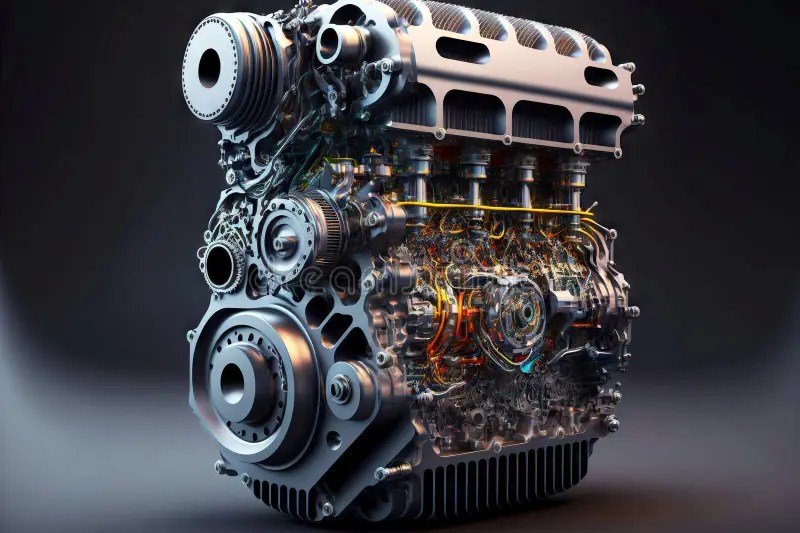
Ever wondered what truly makes your car move? It's more than just pressing the pedal; it's a meticulously choreographed dance of precision engineering unfolding within the heart of your vehicle: the Engine & Internal Components. From the moment you turn the key, a complex ballet of parts ignites fuel, converts heat into motion, and ultimately propels you forward. Understanding these intricate pieces isn't just for mechanics; it empowers you to make better decisions about maintenance, identify potential issues, and appreciate the mechanical marvel beneath your hood.
At a Glance: Understanding Your Engine's Core
- The Engine Block is the main structural framework, housing most of the crucial components.
- Pistons move up and down in cylinders, converting fuel's energy into mechanical work.
- The Crankshaft transforms this up-and-down motion into the rotational energy that drives your wheels.
- The Camshaft precisely times the opening and closing of valves, allowing air in and exhaust out.
- Timing Chains/Belts synchronize the crankshaft and camshaft, ensuring everything works in harmony.
- Spark Plugs provide the crucial spark to ignite the fuel-air mixture.
- Maintenance like regular oil changes and fluid checks are vital for engine longevity.
The Heart of Your Ride: What an Engine Really Does
Think of your car's engine as a sophisticated air pump and a controlled explosion chamber, all rolled into one. Its fundamental job is to convert the chemical energy stored in fuel into mechanical energy, specifically rotational force. This force is then transferred to your wheels, making your vehicle go. Most modern engines utilize 4 to 8 cylinders, though some high-performance or heavy-duty vehicles can feature up to 16. Within these cylinders, a precise sequence of events—drawing in fuel, igniting it, and expelling exhaust—repeats thousands of times a minute, all to keep you moving.
This incredible transformation relies on a myriad of internal components working in perfect synergy. Understanding what each part does helps demystify the powerful machine under your hood, empowering you with knowledge for smarter car ownership.
Decoding the Engine Block: The Foundation of Power
Every great structure needs a solid foundation, and for your engine, that's the engine block. This robust, primary framework is more than just a shell; it's the central hub around which all the major internal components operate.
The Indispensable Engine Block (Cylinder Block)
The Engine Block, often called the cylinder block, is essentially the backbone of your engine. Cast from durable iron or aluminum alloy, it houses the cylinders—those precisely machined bores where the pistons reciprocate. Depending on the engine design, it can comfortably contain anywhere from 4 to 12 cylinders. Beyond the cylinders, the block also provides critical passages for cooling water and serves as the primary attachment point for nearly every other engine component, from the cylinder head to the oil pan. Its structural integrity is paramount to the entire engine's operation and longevity.
The Cylinder Head: Capping the Combustion Chamber
Perched atop the engine block, the Cylinder Head seals the upper end of the combustion chambers. This vital component is where the magic of air and fuel intake, and exhaust gas expulsion, truly happens. It's a complex casting, also typically made of cast iron or aluminum alloy, that integrates the combustion chambers themselves, along with valve guides, valve seats, intake and exhaust ports, and channels for engine coolant. Crucially, it's also where the spark plugs are threaded, ready to ignite the fuel-air mixture. The cylinder head's design significantly impacts an engine's breathing capabilities and overall performance.
The Crankcase: Supporting the Spin
Historically, the Crankcase was a separate, central component forming the casing for the crankshaft mechanism. It diligently supported the crankshaft's main journals and bearings, ensuring proper alignment for smooth rotation. In contemporary engine designs, however, the crankcase is often cleverly integrated into the engine block itself, streamlining the engine's construction and enhancing its rigidity. Whether integrated or distinct, its function remains the same: to protect and support the crankshaft assembly.
Cylinder Liners: Wear Protection for the Engine's Core
To prevent premature wear on the engine block itself, many engines utilize Cylinder Liners. These cylindrical inserts fit snugly into the engine block, forming the actual interior surface of the cylinders. Should these surfaces eventually wear down from the constant friction of the piston rings, they can be replaced, effectively giving the engine block a new lease on life without requiring a complete block replacement. Liners are protected by a thin film of oil and a hard glaze layer that develops over time, further extending their durability. You'll find two main types: dry liners, which are fully supported by the block, and wet liners, which are in direct contact with the engine's cooling water.
Gaskets: The Silent Sealers
Throughout the engine, Gaskets play a humble but critical role. These flexible materials are strategically placed between mating surfaces, like the engine block and cylinder head, or the oil pan and crankcase. Their job is to create a tight seal, preventing the leakage of vital fluids—oil, coolant, and combustion gases. Common examples include the cylinder head gasket (perhaps the most critical), exhaust manifold gaskets, and oil pan gaskets. Each type is specifically designed to withstand the unique conditions of its location, whether it's extreme heat, high pressure, or chemical exposure. Without these unsung heroes, your engine would quickly leak its lifeblood.
The Dance of Combustion: From Piston to Power
Once the engine's structure is understood, we can delve into the dynamic components that translate the raw energy of combustion into usable power. This is where the actual "work" of the engine begins.
The Piston: Converting Fire into Force
At the very heart of the combustion process is the Piston. This cylindrical plug races up and down within its cylinder, acting as the primary medium for converting the heat energy released from ignited fuel into mechanical work. When the fuel-air mixture explodes, the rapidly expanding gases exert immense pressure on the piston's crown, driving it downwards. This motion is then transmitted through the connecting rod to the crankshaft. The piston also has other crucial jobs: it helps seal the combustion chamber to maximize efficiency, draws in fresh charge during the intake stroke, and expels exhaust gases during the exhaust stroke. Its highest point of travel is known as Top Dead Centre (TDC), and its lowest is Bottom Dead Centre (BDC).
The Connecting Rod: Bridging Piston to Crankshaft
The Connecting Rod is precisely what its name implies: it connects the piston to the crankshaft. As the piston moves linearly up and down, the connecting rod facilitates the conversion of this motion into the crankshaft's circular rotation. It's a component subjected to incredible stresses, enduring cycles of tension, compression, bending, and clasping forces with every engine revolution. Made from high-strength steel or sometimes aluminum, its design is crucial for efficiently transferring power without failure.
The Gudgeon Pin (Wrist Pin): A Small but Mighty Pivot
Connecting the piston to the small end of the connecting rod is the Gudgeon Pin, also known as a wrist pin. This small, cylindrical component acts as a pivot point, allowing the connecting rod to articulate as the piston moves. Gudgeon pins are typically made of case-hardened steel for durability and are often hollow to reduce weight, minimizing the reciprocating mass within the engine.
Piston Rings: Sealing, Cooling, and Lubricating
Fitted into precisely machined grooves on the piston, Piston Rings perform multiple critical functions. Primarily, they create a tight seal between the piston and the cylinder wall, preventing combustion gases from escaping into the crankcase (a phenomenon known as "blow-by") and maximizing combustion efficiency. Secondly, they play a vital role in heat transfer, moving excess heat from the piston to the cooler cylinder walls. Finally, and crucially, they regulate engine oil usage by scraping excess oil from the cylinder walls back into the sump, leaving behind a thin, protective film for lubrication.
The Combustion Chamber: Where Energy is Unleashed
The Combustion Chamber is the precisely defined space within the cylinder where the compressed fuel and air mixture is ignited by the spark plug, releasing its powerful energy. This is where the engine's power stroke truly originates. Along with the spark plug, the combustion chamber also houses parts of the piston and, in modern direct-injection engines, the fuel injector nozzle, all designed to optimize the ignition and expansion of gases.
The Spark Plug: The Ignition Point
Every petrol engine needs a trigger for its controlled explosions, and that's precisely the role of the Spark Plug. Threaded into the cylinder head and extending into the combustion chamber, the spark plug emits a precisely timed electrical jolt across a small gap at its tip. This jolt creates an arc, igniting the compressed fuel and air mixture, which then rapidly expands to push the piston down. Without this critical component, your vehicle simply wouldn't start or run.
Timing is Everything: Orchestrating the Engine's Rhythm
For the engine's parts to work harmoniously, they must operate with impeccable timing. A fraction of a second off, and the entire system can fail dramatically. This section explores the components responsible for this precise mechanical ballet.
The Crankshaft: Turning Linear into Rotational
The Crankshaft is arguably the most crucial component for converting the engine's raw power into usable motion. It's the component that takes the pistons' linear (up-and-down) motion, transmitted via the connecting rods, and transforms it into rotational movement. This spinning motion is what ultimately drives the wheels through the gearbox. The crankshaft itself is a complex forging, featuring crankpins for connecting rods, webs for structural integrity, balancing weights to minimize vibration, and main journals that rest in the engine block's bearings. Its front end typically drives accessory components like the camshaft, vibration damper, fan, water pump, and generator, while its rear end supports the heavy flywheel.
The Camshaft: Directing the Engine's Breath
The Camshaft is responsible for the precise timing of your engine's valve opening and closing. It converts rotational movement, typically driven by the crankshaft, into the linear motion required to operate the valve train (valve lifters, push-rods, rocker arms, and finally, the valves themselves). Each "cam" lobe on the shaft is carefully shaped to open and close specific valves at just the right moment in the combustion cycle. Critically, the camshaft rotates at exactly half the speed of the crankshaft, ensuring that the valves complete their full cycle once for every two rotations of the crankshaft (one full four-stroke cycle).
Camshaft Pulley (Cam Pulley): Synchronizing the Spin
A critical part of the engine's timing system, the Camshaft Pulley directly controls the rotation speed of the camshaft. It works in perfect synchronicity with the crankshaft's rotation, ensuring that the engine valves open and close exactly when they should, relative to the piston's position. This coordination is non-negotiable for smooth and efficient engine operation.
Timing Chain / Timing Belt: The Great Synchronizer
The Timing Chain (a robust metal chain) or Timing Belt (a reinforced rubber belt) is the unsung hero that maintains the essential synchronization between the crankshaft and the camshaft. It ensures that the engine valves open and close at precisely the correct times during the intake and exhaust strokes. In "interference engines" (a common design), where pistons and valves occupy the same space at different times, a broken timing chain or belt can lead to catastrophic piston-valve collision, causing severe engine damage. This is why its integrity is paramount.
Timing Belt Drive Pulley: Guiding the Rhythm
Complementing the timing belt or chain, the Timing Belt Drive Pulley is an essential part, especially in interference engines. It acts as a guide and tensioner, helping to maintain the synchronized rotation of the crankshaft and camshaft. This precise control helps prevent the dreaded piston-valve collision by keeping all components in their assigned timing.
The Flywheel: Smoothing Out the Power Strokes
Attached to the rear end of the crankshaft, the Flywheel is a heavy steel wheel designed to store rotational energy. It acts like a mechanical battery, dampening the inevitable torque fluctuations that occur as individual cylinders fire. By maintaining a more constant crankshaft speed, the flywheel ensures smoother engine operation, reduces vibrations, and contributes to the extended lifespan of various engine components. It's also the surface against which the clutch engages to transfer power to the transmission. You might also want to Explore our generator parts to see how flywheels play a similar role in generator systems, smoothing out power delivery.
Engine Distributor (Older Engines): Directing the Spark
In older spark-ignition engines (before the widespread adoption of coil-on-plug or distributor-less ignition systems), the Engine Distributor was a key player. This enclosed rotating shaft took the high-voltage electricity from the ignition coil and directed it to each spark plug in precisely the correct firing order and timing. While largely phased out in modern vehicles, it was once a critical component for engine ignition.
Breathing and Expelling: The Engine's Lungs
Just like any living organism, an engine needs to breathe. It draws in air (and sometimes fuel), processes it, and then expels the waste. This complex intake and exhaust system is critical for efficiency and performance.
The Intake Manifold: The Airway to Power
The Intake Manifold is responsible for distributing air (or an air-fuel mixture in older, carbureted engines) evenly to each of the engine's cylinders. It acts as a complex series of runners that guide air from the air filter, through the throttle body (which controls the amount of air entering), and finally into the intake ports of the cylinder head. In many modern engines, the fuel injectors are also housed within or near the intake manifold, ensuring precise fuel delivery.
The Exhaust Manifold: Gathering the Aftermath
Once combustion occurs, the spent gases need to be expelled efficiently. That's the job of the Exhaust Manifold. This component collects the hot exhaust fumes from the engine's cylinders and channels them into a single pipe, directing them towards the catalytic converter (for emissions control) or, in turbocharged engines, towards the turbocharger itself. Due to the extreme temperatures of exhaust gases, exhaust manifolds are built to be incredibly robust and heat-resistant.
Engine Valves: The Gates of the Combustion Chamber
The Engine Valves are mechanical gates that meticulously regulate the flow of air and fuel into the combustion chambers, and the flow of exhaust gases out. They operate in a precise, synchronized sequence with the camshaft, opening and closing at specific times. The most common type is the "poppet" valve, which uses a stem and a mushroom-shaped head to seal the port.
- Intake Valves: These open to admit the fresh charge—either the air/fuel mixture (in petrol engines) or just air (in diesel engines)—into the cylinder.
- Exhaust Valves: These open to release the spent exhaust gases from the cylinder after combustion.
This coordinated opening and closing, often facilitated by rocker arms, is fundamental to the engine's four-stroke cycle.
Keeping Things Cool and Lubed: Engine Vital Fluids & Systems
An engine generates immense heat and friction. Without robust supporting systems for cooling and lubrication, it would quickly seize up. These components ensure the engine runs within optimal temperature ranges and with minimal wear.
The Water Pump: Your Engine's Thermostat
The Water Pump is the heart of your engine's cooling system. It relentlessly circulates coolant (a mixture of water and antifreeze) from the radiator, through the engine's internal passages (coolant jackets in the block and cylinder head) where it absorbs heat, and then back to the radiator to dissipate that heat into the air. This continuous circulation is vital for preventing engine overheating, which can lead to severe damage. Due to constant operation, water pumps can wear out over time, making regular checks and timely replacement crucial.
The Oil Pan (Sump): The Engine's Oil Reserve
Attached to the lower part of the engine, the Oil Pan, also known as the sump, serves as the primary reservoir for engine lubricating oil. Beyond simply storing the oil, it also plays a role in cooling the oil and allowing air to escape (ventilation). As the oil circulates, it collects impurities, which then settle in the bottom of the pan. A convenient drain plug is located at its lowest point, allowing for easy oil changes.
The Oil Pan Drain Bolt (Oil Drain Plug): The Gateway to Oil Changes
The Oil Pan Drain Bolt is located at the very bottom of the oil pan. Its sole purpose is to allow you to drain the old, spent engine oil during an oil change. It usually features a gasket or washer to ensure a leak-proof seal. If you ever experience a leak from this area, it might be fixable by simply replacing the gasket. In unfortunate cases where the threads in the oil pan itself get stripped (often from overtightening), an oversized plug can sometimes cut new threads, avoiding the costly replacement of the entire oil pan.
The Oil Filter: Keeping the Lifeblood Clean
Your engine oil is its lifeblood, and the Oil Filter acts as its kidneys, diligently removing contaminants. Harmful debris, dirt, and microscopic metal particles, which inevitably accumulate during engine operation, are trapped by the filter's media. A clean oil supply ensures that the engine's moving parts are properly lubricated and protected, significantly prolonging the engine's lifespan and enabling it to run smoothly. Regular oil and filter changes are non-negotiable for engine health.
Distributor O-Ring: Sealing the Spark
If your engine utilizes a distributor (common in older models), the Distributor O-Ring is a small but mighty component that seals the distributor housing where it meets the engine block. Its job is to prevent oil leaks at the base of the distributor, ensuring the engine stays clean and properly lubricated.
Cylinder Head Cover: Protecting the Valve Train
Sitting atop the cylinder head, the Cylinder Head Cover (often called a valve cover) seals off the intricate space above the cylinder head. This area typically contains the camshaft and valve train components (rocker arms, valve springs). The cover prevents external elements from entering this critical space and, importantly, contains oil droplets from the lubrication system, preventing them from escaping and keeping your engine bay tidy.
Rubber Grommet: Cushioning and Protecting
Rubber Grommets are small, flexible rings used throughout the engine bay. They serve multiple purposes: protecting wires and hoses where they pass through metal openings, reducing vibration between components, and shielding engine valves or other delicate parts from damage by providing a cushioned barrier. They are an essential part of preventing wear and tear from constant movement and friction.
Beyond the Blueprint: Understanding Engine Maintenance
Now that you have a clearer picture of the engine's incredible internal complexity, it should be evident why maintenance is not merely a suggestion, but a crucial imperative. The engine is undeniably the core of your car, and its proper functioning dictates everything from performance and fuel efficiency to safety and longevity.
- Regular Oil Changes: As mentioned, engine oil is vital for lubrication and cooling. Over time, it breaks down and accumulates contaminants. Adhering to your manufacturer's recommended oil change intervals is the single most important maintenance step you can take.
- Fluid Flushes: Beyond oil, your engine relies on other fluids: coolant for temperature regulation, and transmission fluid (if applicable) for gear changes. Timely flushes ensure these fluids are clean and effective, preventing overheating and premature component wear.
- Timely Replacement of Belts and Hoses: The timing belt/chain is critical, but accessory belts (for the alternator, power steering, A/C) and hoses (for coolant, fuel) are also vital. They degrade over time due to heat and stress. Inspecting and replacing them before they fail can prevent roadside breakdowns and much more costly repairs. A snapped timing belt, for instance, can lead to severe engine damage, while a burst coolant hose can quickly cause your engine to overheat.
Neglecting these fundamental maintenance tasks can lead to a domino effect of issues, from reduced fuel economy and diminished performance to catastrophic engine failure. Investing a little time and money in preventative care will save you significant headaches and expenses down the road, ensuring your vehicle remains a reliable partner on every journey.
Your Engine, Demystified: The Road Ahead
Navigating the intricate world of your car's Engine & Internal Components might seem daunting, but armed with this knowledge, you're better equipped to understand the symphony of parts working beneath your hood. From the foundational engine block to the spark igniting the combustion, each component plays a non-negotiable role in creating the power that drives your vehicle.
Remember, this deep dive isn't just about technical terms; it's about empowering you to be a more informed car owner. With a foundational understanding of these essential components and a commitment to proactive maintenance, you're not just driving a car—you're an active participant in keeping its heart beating strong. So the next time you hear that engine purr, you'll know exactly what marvels are unfolding within.