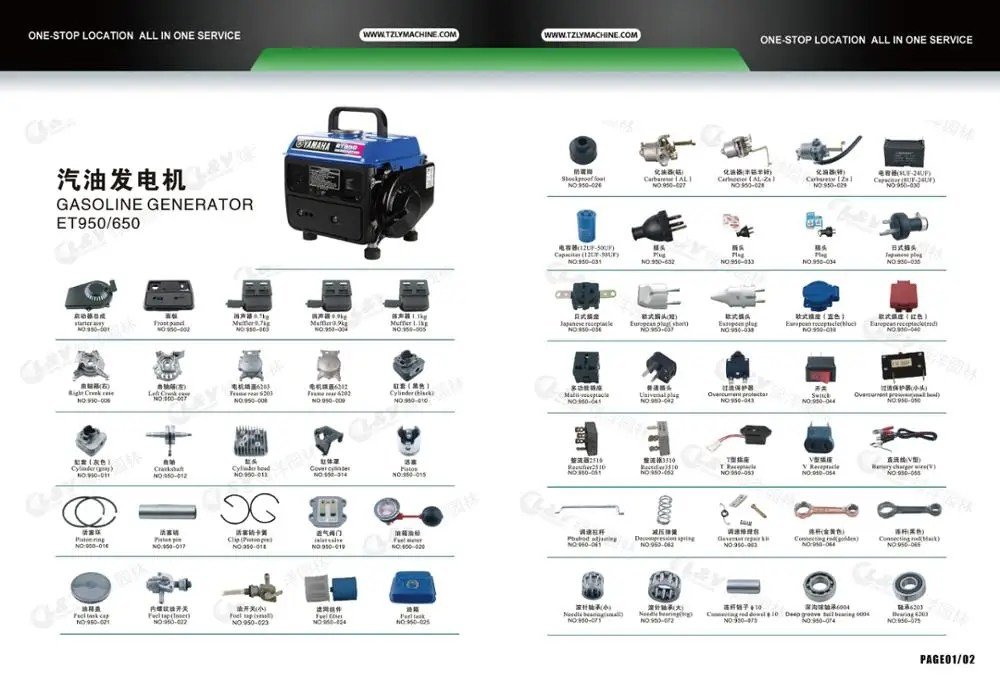
Few things are as frustrating as a generator that won't start, especially when you need it most. The next layer of frustration often comes when you try to find the replacement part, only to be met with a sea of seemingly identical components that just don't quite fit. This isn't just an inconvenience; an ill-fitting part can compromise your generator's performance, safety, and lifespan. This is where understanding the nuances of Generator Type & Brand Specific Parts becomes not just helpful, but absolutely critical for successful, lasting repairs.
Whether you're tackling a minor tune-up or a more complex repair, knowing precisely which part to buy for your specific generator model and brand is the cornerstone of effective maintenance. Forget "close enough"—when it comes to generators, precision is paramount.
At a Glance: Your Quick Guide to Generator Parts
- Identity First: Always locate and note your generator's model and serial numbers before hunting for parts.
- Engine vs. Generator: Remember that the engine often has its own separate model and serial numbers.
- OEM is Key: Original Equipment Manufacturer (OEM) parts are designed for an exact fit and optimal performance.
- Common Culprits: Filters, gaskets, fuel valves, and spark plugs are frequent replacement items.
- Preventative Power: Replacing worn parts proactively can save you from bigger headaches and costs down the line.
Why "Exact Fit" Matters: The Core of Generator Longevity
Imagine trying to put a square peg in a round hole – that's often what happens when you use generic or incorrect parts in your generator. Generators are intricate machines with components engineered to work in precise harmony. When you introduce a part that doesn't meet the manufacturer's exact specifications, you're inviting a cascade of potential problems.
An "exact fit" isn't just about the physical dimensions; it's about material composition, tolerances, performance characteristics, and even how the part interacts with other systems. Using the right Generator Type & Brand Specific Parts ensures that:
- Safety is Maintained: Incorrect parts can lead to fuel leaks, electrical shorts, overheating, or even catastrophic failure, posing serious risks to you and your property.
- Peak Performance is Restored: Only an OEM-specified part can guarantee that your generator will operate at its intended power output, fuel efficiency, and reliability.
- Your Warranty Stays Intact: Many manufacturer warranties are voided if non-OEM or improperly installed parts are used for repairs.
- Longevity is Preserved: Designed to integrate seamlessly, OEM parts reduce wear and tear on adjacent components, extending the overall life of your generator.
While aftermarket parts might offer a lower upfront cost, the potential for compatibility issues, reduced performance, and accelerated wear often makes them a false economy. For critical components, investing in the original is almost always the smarter choice.
The Treasure Hunt: Pinpointing Your Generator's Identity
Before you can even begin to think about specific parts, you need to precisely identify your generator. This isn't just about knowing it's a "Generac" or a "Honda"; it's about drilling down to the exact model and serial number. This information is your golden ticket to finding the correct Generator Type & Brand Specific Parts.
Where to Find Your Generator's Model & Serial Numbers
Most generators come with an identification label or metal tag. This crucial tag usually contains the model number, serial number, and sometimes other important specifications. Its location is often chosen to be relatively protected from moving parts and heat, yet accessible for service.
Common places to check include:
- Near the Handle: Many portable generators have tags strategically placed here for easy viewing.
- Under the Seat: For generators with an operator's seat or a main control panel area.
- On the Side of the Unit: Look on the frame, near the fuel tank, or sometimes tucked away on a support brace.
- Beneath the Canopy: On larger standby generators, the tag might be inside an access panel.
Pro Tip: Once you find this tag, take a clear photo of it with your smartphone. This simple step will save you countless trips back and forth to the garage and ensure you always have the correct information readily available when ordering parts online or speaking with a dealer. It's a small investment of time that pays huge dividends.
Don't Forget the Engine! A Separate Identity
This is a common point of confusion for many generator owners. While your generator unit has a brand and model, the engine inside often has its own distinct brand, model, specification ("spec"), and serial number. A Generac portable generator, for example, might be powered by a Honda engine, or an engine from Kohler, Briggs & Stratton, or another manufacturer.
Why does this matter? Many critical wear-and-tear parts—like air filters, oil filters, spark plugs, and carburetor components—are specific to the engine, not necessarily the overall generator unit. If you're looking for an oil filter for your "Generac 3000," you might actually need an oil filter for a "Briggs & Stratton Intek 205cc engine," which is the powerplant within that Generac model.
Here's where to look for your engine's identification:
- Above the Muffler: Often stamped into a metal plate or sticker here.
- Near the Spark Plug: Sometimes etched directly onto the engine block or a nearby plate.
- Near the Valve Cover Head: Another common spot for an engine's ID tag.
Again, snap a photo of this tag too! Having both your generator's overall model/serial and your engine's model/serial is the ultimate preparation for any repair or maintenance task.
Decoding the Part Number: Your Blueprint for Purchase
Once you have your generator and engine model numbers, the next step is finding the exact part number. This is where specialized resources become invaluable. Websites like PartsTree and manufacturer-specific portals provide access to OEM (Original Equipment Manufacturer) parts diagrams.
These diagrams are like exploded views of your generator, showing every single component in its proper place, each with a unique part number. By referencing your model number, you can navigate these diagrams to pinpoint the precise component you need. This process virtually eliminates guesswork and significantly reduces the chance of ordering the wrong part. Always cross-reference the part number with the description and, if possible, a picture, to ensure it matches the component you intend to replace.
Common Generator Parts & What They Do (Brand Examples)
Understanding the function of common generator components helps you diagnose issues and anticipate replacement needs. Here's a look at some key Generator Type & Brand Specific Parts and their roles, incorporating insights from various manufacturers.
The Lifelines: Fuel & Air System Components
These parts are crucial for getting clean fuel and air to the engine, essential for combustion.
- Fuel Valve (Generac Portable): This component is typically found attached to the fuel tank on Generac portable generators. Its primary job is to regulate the flow of fuel from the tank to the engine. A functioning fuel valve is vital for both starting and stopping the generator safely, preventing fuel leaks when the unit is not in use, and ensuring a consistent fuel supply during operation. If your generator struggles with fuel delivery or leaks, this is a prime suspect.
- Carburetor Gasket (Honda Engines): For Honda engines, the carburetor gasket provides an airtight seal between the carburetor and the insulator. These gaskets are often made from composite materials. Over time, due to heat, vibration, and exposure to fuel, these gaskets can degrade, crack, or compress, leading to air leaks that disrupt the fuel-air mixture. This can cause rough idling, stalling, or difficulty starting. Replacing a worn gasket restores the necessary airtight seal, which can significantly improve engine performance.
The Lubricators & Cleaners: Engine Protection
These parts ensure your engine runs smoothly and efficiently, protected from contaminants.
- Oil Filter (Intek, Vanguard OHV, Generac Portable Engines): The oil filter is a non-negotiable component for engine health. Its job is to remove harmful contaminants—such as dirt, metal shavings, and carbon deposits—from the engine oil. This prevents abrasive wear on internal engine components, ensuring optimal performance and compliance with EPA emission regulations. For engines like those found in Intek, Vanguard OHV, and various Generac portable generators, regular oil filter replacement (at least once per season or after a specified number of hours) is crucial preventative maintenance. Skipping this can lead to premature engine wear and costly repairs.
- Fuel Filter: While not explicitly detailed in the provided context, fuel filters are a common companion to oil filters and are equally vital. They prevent debris and contaminants from reaching the carburetor, ensuring clean fuel delivery and preventing blockages.
The Spark of Life: Ignition System
Without this, your engine simply won't start.
- Spark Plug (Honda OEM for Small Engines): The spark plug is the heart of the ignition system for internal combustion engines, including those from Honda. It delivers a precisely timed electrical current from the ignition coil to ignite the compressed fuel-air mixture in the cylinder, initiating the power stroke. Over time, spark plugs can foul, wear down, or develop incorrect gaps, leading to misfires, reduced power, poor fuel efficiency, or starting problems. It's crucial to adjust the spark plug gap according to your owner's manual for optimal performance. Replacing a worn spark plug is a simple, yet highly effective, tune-up step.
The Seals & Gaskets: Preventing Leaks & Maintaining Pressure
These small but mighty parts keep fluids and gases where they belong.
- Valve Cover Gasket (Generac Portable Small Engines): Found on small engines within Generac portable generators, this gasket creates a seal between the valve cover and the cylinder head. Its purpose is to prevent oil from leaking out of the top of the engine, where the valvetrain components are lubricated. A leaking valve cover gasket can lead to messy oil leaks and, if severe enough, can cause low oil levels, potentially damaging the engine.
The Stabilizers: Vibration Control & Support
These components ensure smooth operation and protect the generator's structure.
- Lower Rubber Foot (Honda OEM): For Honda generators, these OEM rubber feet are designed to reduce vibration transmitted from the working engine to the generator's frame and the surface it rests on. Excessive vibration can cause components to loosen, accelerate wear, and make the generator uncomfortable to be around. These feet typically require a bolt (often not included) and a wrench for installation, providing essential dampening.
- Rubber Mounts (Generac OEM): Similar to rubber feet, these two OEM Generac mounts support portable generators, providing crucial vibration isolation. They consist of a rubber pad fused to a threaded metal shaft. These mounts are secured to the generator's frame with flange nuts (sold separately). If your generator is vibrating excessively or "walking" across the ground during operation, worn rubber mounts are a likely culprit. Replacing them restores stability and reduces wear on the entire unit.
All these components are generally sold individually and are direct, original replacements from the manufacturer, ensuring they meet the stringent quality and fit requirements for your specific Generator Type & Brand Specific Parts. You can learn more about a wider range of components by opting to explore all generator parts.
Beyond the Basics: When to Replace & Why
Knowing what a part does is one thing; knowing when to replace it is another. Generator parts aren't designed to last forever. They undergo stress, heat, vibration, and exposure to fuel and oil, all of which contribute to wear and tear.
Preventative Maintenance vs. Reactive Repairs:
Many parts mentioned above, like oil filters and spark plugs, are considered "consumables" or "wear items." They are meant to be replaced at regular intervals, often based on hours of operation or calendar time (e.g., annually, seasonally). This proactive approach, known as preventative maintenance, is the bedrock of generator reliability. It prevents small issues from escalating into major, costly breakdowns.
The Cost of Neglect:
Ignoring recommended replacement schedules can have severe consequences. A clogged oil filter starves the engine of clean oil, leading to catastrophic internal damage. A worn carburetor gasket can cause your engine to run lean, overheating it. A failing fuel valve might cause a dangerous fuel leak or leave you stranded with no power. In almost every scenario, the cost of replacing a small, inexpensive part proactively pales in comparison to the expense of repairing major engine damage or, worse, replacing the entire generator.
Always consult your generator's owner's manual for specific maintenance schedules and recommended replacement intervals. This document is tailored to your exact Generator Type & Brand Specific Parts and operating conditions.
Navigating the Market: Sourcing Your Parts Wisely
Once you know exactly what you need, where do you get it? The market for generator parts can be vast, ranging from authorized dealerships to online marketplaces. Making an informed decision here is almost as important as identifying the part itself.
Authorized Dealers vs. Online Retailers
- Authorized Dealers: These are often the most reliable source for genuine OEM parts. They have direct access to manufacturer inventories, expertise in identifying specific parts, and often offer warranty support. The downside can be higher prices and potentially limited local availability.
- Online Retailers (Specialized): Many reputable online stores specialize in power equipment parts. Sites like PartsTree (as mentioned in our earlier context) are excellent for their extensive diagrams and genuine OEM offerings. They often provide competitive pricing and convenience.
- General E-commerce Sites: While tempting due to competitive pricing and vast selection, exercise caution. It's easier to encounter generic, low-quality, or counterfeit parts. Always verify the seller's reputation and ensure the part is explicitly listed as OEM or a high-quality, reputable aftermarket equivalent.
OEM vs. Aftermarket: Making the Right Choice
We've touched on this, but it bears repeating:
- OEM (Original Equipment Manufacturer) Parts: These are the parts made by or for your generator's original manufacturer. They are guaranteed to fit, perform, and meet the same quality standards as the components your generator came with. For critical engine components, safety-related parts (like fuel valves), and anything that directly impacts performance, OEM is almost always the superior choice for Generator Type & Brand Specific Parts.
- Aftermarket Parts: These parts are produced by companies other than the original manufacturer. While some aftermarket producers offer high-quality alternatives, many prioritize cost savings, potentially at the expense of material quality, precise tolerances, or longevity. For non-critical items (like perhaps a less essential handle grip, if you can find one that fits perfectly), aftermarket might be an option. However, for anything impacting the engine, fuel system, or electrical components, the risks often outweigh the savings.
Pitfalls to Avoid
- Buying Based on Appearance Alone: Just because two parts look similar doesn't mean they're interchangeable. Internal specifications, material composition, and tolerances can differ significantly.
- Ignoring Model/Serial Numbers: This is the most common mistake. Guessing or making assumptions based on the generator's general size or color is a recipe for ordering the wrong part.
- Assuming Interchangeability Across Brands: While some engine manufacturers supply engines to multiple generator brands, it's never safe to assume a part from a "Honda" generator will fit a "Generac" just because it also uses a Honda engine. Always verify with specific part numbers and diagrams.
Troubleshooting Common Part-Related Issues
Many common generator problems can be traced back to a specific part. Knowing which parts affect which symptoms can significantly speed up your troubleshooting process.
- Generator Won't Start (or Starts Hard):
- Spark Plug: A fouled, worn, or incorrectly gapped spark plug is a frequent culprit.
- Fuel Valve: If the valve isn't opening, fuel won't reach the engine.
- Carburetor Gasket: An air leak here can disrupt the fuel-air mixture needed for ignition.
- Fuel Filter: A clogged fuel filter starves the engine of fuel.
- Engine Running Rough, Surging, or Stalling:
- Carburetor Gasket: An air leak will cause unstable engine operation.
- Oil Filter/Fuel Filter: Clogged filters restrict flow, causing the engine to struggle.
- Spark Plug: Inconsistent spark leads to rough running.
- Excessive Vibration or "Walking":
- Lower Rubber Foot/Rubber Mounts: Worn or damaged vibration dampeners are designed to absorb these forces. If they fail, the generator will feel unstable and shake excessively.
- Oil or Fuel Leaks:
- Valve Cover Gasket/Carburetor Gasket: Any gasket designed to seal fluids or air can fail and lead to leaks.
- Fuel Valve: A faulty fuel valve can drip fuel, posing a fire hazard.
The DIY Edge: Tools and Tips for Part Replacement
Armed with the right part, you're halfway there. For the DIY enthusiast, replacing many common generator parts is well within reach, provided you follow a few essential guidelines:
- Safety First: Always disconnect the spark plug wire to prevent accidental starting. If dealing with fuel system components, ensure the fuel tank is mostly empty or the fuel valve is closed, and work in a well-ventilated area away from ignition sources. Wear appropriate personal protective equipment (PPE), such as gloves and eye protection.
- Consult Your Manual: Your generator's owner's manual is your most valuable tool. It contains specific, detailed instructions for disassembly, installation, and often crucial torque specifications for bolts. These details are specific to your Generator Type & Brand Specific Parts and are not generic.
- Basic Tools: Most common part replacements require standard tools:
- Screwdrivers (Phillips and flathead)
- Wrenches (open-end, box-end, or socket sets)
- Pliers
- A spark plug wrench (often included with the generator)
- Feeler gauges (for spark plug gapping)
- A torque wrench (highly recommended for critical engine bolts to prevent over-tightening or under-tightening).
- Organize and Document: As you disassemble components, take photos or even a video with your phone. Keep track of screws, bolts, and small parts by placing them in labeled containers or laying them out in the order of removal. This makes reassembly much smoother.
- Clean as You Go: Before installing a new part, clean the area around where it will sit. Remove any old gasket material, dirt, or grime to ensure a perfect seal and fit.
Remember, patience and attention to detail are your best allies in any DIY generator repair. Don't rush, and if you ever feel out of your depth, don't hesitate to consult a certified generator technician.
The Power of Precision: Your Next Steps
Maintaining a generator, whether for emergency backup or regular job site use, hinges on precision. Understanding the critical role of Generator Type & Brand Specific Parts isn't just about buying the right component; it's about safeguarding your investment, ensuring reliable power when you need it most, and maintaining safe operation.
Your immediate next step should always be identification. Locate those model and serial numbers for both your generator and its engine, capture them with a photo, and keep them in a safe place. With this information, you're empowered to confidently source the exact OEM replacement parts, ensuring your repairs are an exact fit—and your generator runs perfectly for years to come.